Your cart is empty
Your cart is currently empty. Let us assist you in finding the right product.

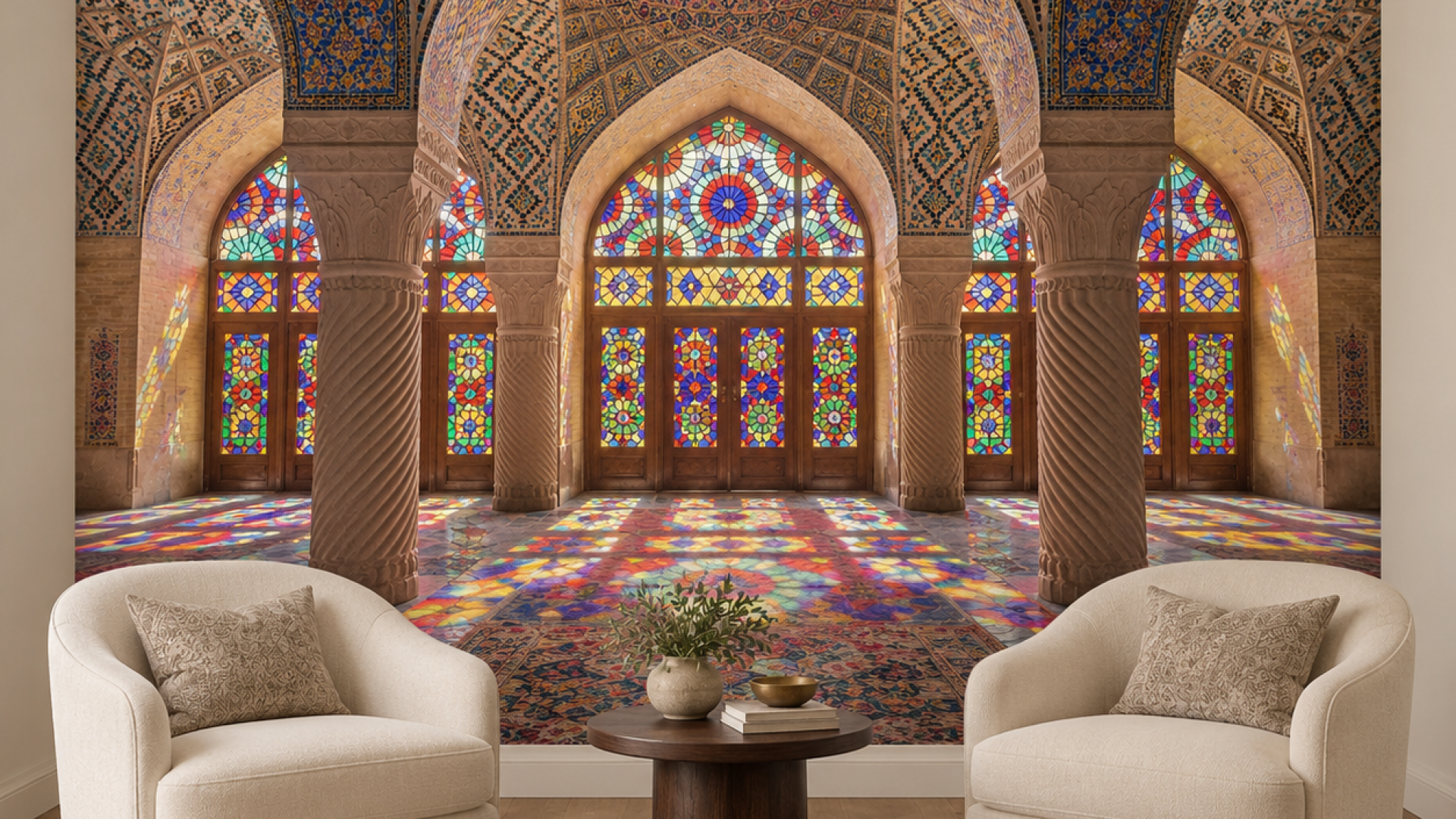
Contemporary interiors often rely on clean lines, thoughtful proportions, restrained colors, and carefully selected decorative elements. Modern Islamic wall art for contemporary interiors can add another layer of character by combining Islamic geometric inspiration with a more streamlined approach to home decoration.
Wafa Noor’s Blue Mihrab Wall Murals – Cobalt Islamic Geometry brings this concept to life through a cobalt blue and ivory composition. An ivory pointed arch sits within dense cobalt and cream geometric ornament, creating a structured feature wall that can complement both modern and transitional interiors.
Modern Islamic wall art combines traditional visual references with contemporary approaches to color, scale, composition, and interior styling. Instead of requiring a traditionally decorated room, Islamic-inspired artwork can become one carefully selected element within an otherwise modern environment.
Geometric patterns are particularly adaptable because they can work alongside simple furniture and architectural lines.
Islamic architecture and art have long used geometry, symmetry, repetition, arches, and ornamental structure. Contemporary wall art can reinterpret these elements in ways that suit today's homes.
The goal is not necessarily to reproduce a historic interior. Instead, modern Islamic wall decor can use selected architectural and geometric characteristics to create a distinctive contemporary focal point.
Geometric patterns naturally complement modern interiors because both approaches value structure and proportion.
A detailed geometric wall can contrast with a minimalist sofa or simple coffee table. This relationship between intricate pattern and clean furniture can make the room feel layered without requiring numerous decorative objects.
A modern Islamic mural can be styled in several ways depending on the room, furniture, and desired atmosphere.
Use the mural on one prominent wall rather than distributing strong patterns throughout the room.
This approach gives the interior a clear focal point. In a living room, the wall behind the sofa can provide a natural location, while a bedroom may benefit from a carefully selected backdrop wall.
Minimalist furniture provides visual breathing room around detailed wall art.
A simple sofa, streamlined console, or clean-lined dining table can contrast with the intricate geometric composition. This makes the wall design feel intentional rather than overwhelming.
Cobalt blue can serve as the primary accent color while ivory and neutral tones provide balance.
You can repeat the blue subtly through cushions, a rug detail, artwork, or a small decorative object. Avoid trying to reproduce the exact shade throughout the entire room.
The pointed arch in the Wafa Noor mural gives the wall an architectural quality.
The central open shape can create a visual center behind furniture or within a larger open-plan area. It can also help connect the wall decoration with architectural features already present in the room.
Neutral fabrics and natural materials can soften a strong geometric pattern.
Consider pairing the mural with linen-look textiles, neutral upholstery, natural wood, or other understated finishes. The result can maintain a contemporary feel while adding warmth and depth.
Islamic geometric design often works naturally with symmetrical furniture arrangements.
Two similar chairs, balanced side tables, or centered furniture can reinforce the visual order of the mural. However, symmetry should support the room rather than become a strict requirement.
A detailed feature wall does not necessarily need additional strong artwork nearby.
Keeping surrounding walls relatively simple gives the geometric design room to remain visually prominent. This is particularly useful in compact interiors.
Modern Islamic wall art can also be incorporated into a contemporary prayer area.
A mihrab-inspired design can provide a decorative architectural reference while maintaining a clean environment. If the space is used for prayer, the decorative mural should not be treated as the sole method for determining the Qibla direction.
The same design can produce different visual effects depending on its location.
A living room offers enough wall area for a strong feature design in many homes.
Place the mural behind a sofa or on another prominent wall and coordinate it with simple furniture. Neutral upholstery can allow cobalt blue and ivory to become the room's primary decorative accents.
A bedroom benefits from visual consistency and controlled decoration.
The mural can become a sophisticated backdrop when paired with restrained bedding and simple furniture. Avoid adding too many patterned textiles if the wall already contains dense geometric ornament.
In a dining area, an Islamic geometric mural can act as a decorative background behind the dining table.
A simple table, modern lighting, and neutral chairs can create contrast with the intricate wall pattern. The result can feel contemporary without removing the Islamic character of the artwork.
A home office can benefit from a visually structured background.
Use the mural behind a desk or on an adjacent wall while keeping shelves and accessories relatively simple. This approach creates a distinctive setting without making the workspace feel overly decorative.
Hallways can provide useful opportunities for feature walls.
A carefully measured mural can turn a plain passage into a more intentional design element. Because hallways may be narrower than living spaces, pay particular attention to wall proportions and available lighting.
Color coordination is one of the easiest ways to connect Islamic wall decor with a contemporary interior.
The Wafa Noor design combines cobalt blue with ivory and cream. This creates a strong contrast while maintaining a relatively focused palette.
The ivory arch provides visual openness, while the surrounding blue and cream geometry establishes pattern and definition.
Cobalt and ivory can work alongside several neutral interior palettes.
Consider combinations such as:
The goal is not to make every surface identical. A controlled palette can instead help the mural become part of a larger visual system.
The scale of Islamic wall decor has a significant effect on the character of a contemporary room.
| Option | Advantages | Considerations |
|---|---|---|
| Large mural | Strong focal point and continuous pattern | Requires accurate wall measurement |
| Medium artwork | Balanced visual impact | May need additional styling |
| Small artwork | Flexible and easy to reposition | Can look undersized on large walls |
| Multiple pieces | Allows creative arrangement | May compete with detailed geometry |
A large mural can be particularly effective when the intention is to create one architectural statement. Smaller pieces may be preferable when flexibility and frequent changes are more important.
Contemporary interiors often depend heavily on proportion. A feature wall should relate to the furniture, ceiling height, and surrounding architecture.
Wafa Noor offers custom sizing for the Blue Mihrab Wall Murals. This allows the wall dimensions to be considered when planning the artwork.
Measure the complete width and height of the intended wall.
Include architectural details such as doors, windows, trim, and outlets in your planning. Do not rely solely on the visible space above furniture.
Think about how much of the wall should become the focal point.
A large mural may suit an expansive open wall, while a more carefully proportioned application may work better in a compact room. Custom sizing is most useful when it is based on accurate measurements rather than assumptions.
A modern Islamic interior does not require every decorative element to have an Islamic motif. One strong design element can often establish the theme.
Why does this approach work? A carefully chosen feature wall provides a clear visual identity while allowing modern furniture and architecture to remain clean and functional.
Consider these styling principles:
The quality of the final feature wall depends partly on preparation and correct installation.
The wall should be clean, dry, and smooth before application. If the surface has recently been painted, allow the paint to fully cure before installing the wallpaper.
Installation and care depend on the wallpaper material selected.
For example, non-woven or vinyl wallpaper requires suitable wallpaper adhesive. Other materials should be installed according to their specific product instructions.
After installation, evaluate the mural under both natural and artificial lighting.
Screen settings can affect how colors appear before purchase, and actual colors may vary slightly depending on lighting and display conditions.
Combining several strong decorative styles can make a contemporary room feel visually disconnected.
If the mural has detailed Islamic geometry, let it become the main decorative statement and choose supporting pieces carefully.
A feature wall that is too small may look disconnected from the furniture. An excessively large composition without consideration of doors, windows, and room proportions may also create an awkward result.
Cobalt blue can be visually powerful. Repeating it across every major surface may reduce the impact of the mural.
Use the color selectively so the wall remains the main accent.
Large furniture, shelving, or a television can obscure the central architectural elements of a mural.
Plan furniture placement before installation whenever possible.
A smooth-looking final result begins with the wall itself. Dirt, moisture, unevenness, or uncured paint can interfere with proper application.
Wafa Noor combines Islamic-inspired visual elements with decorative compositions suitable for contemporary interiors.
The Blue Mihrab Wall Murals – Cobalt Islamic Geometry includes:
This makes the design adaptable to different interior concepts while retaining a clear Islamic visual identity.
If you are planning a modern Islamic feature wall, use this simple process:
Modern Islamic wall art combines Islamic-inspired motifs such as geometric patterns and architectural arches with contemporary approaches to composition, color, and interior styling. It can be used in modern homes without requiring traditional furniture or decoration throughout the room.
Yes. Detailed Islamic geometry can create an effective contrast with minimalist furniture and clean architectural lines. Keeping surrounding decor simple can help the artwork remain the primary visual feature.
The design features cobalt blue, ivory, and cream. The ivory pointed arch creates a lighter central area, while the surrounding cobalt and cream geometry provides contrast and visual structure.
Yes. Custom sizing is available. Accurate measurements of the full intended wall are important before ordering to help plan the mural appropriately.
No. Any architectural relief shown in the artwork is part of the printed design. It should not be interpreted as actual carved or physically raised relief.
The mural is designed to complement living rooms, bedrooms, offices, dining rooms, and hallways. It can also be used decoratively in a prayer space, provided the Qibla direction is confirmed independently.
The wall should be clean, dry, and smooth. Newly painted walls should be allowed to fully cure before wallpaper installation.
No. Installation and care vary according to the wallpaper material selected. Non-woven or vinyl wallpaper requires suitable wallpaper adhesive, while other materials should follow their specific instructions.
No. Peel-and-stick wallpaper cannot be reused after removal. Review the applicable installation and removal instructions before beginning the project.
Use the mural on one primary feature wall and keep surrounding furniture and accessories relatively restrained. Neutral furniture, coordinated colors, and limited competing patterns can help the artwork remain visually dominant.
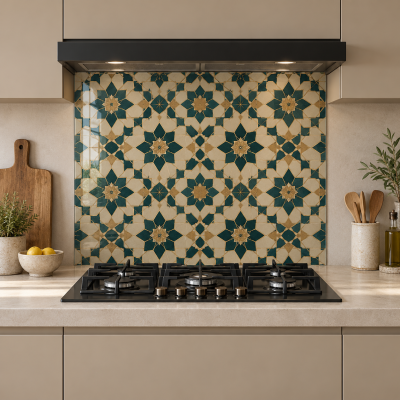
Discover more stories and style tips to keep your inspiration flowing.
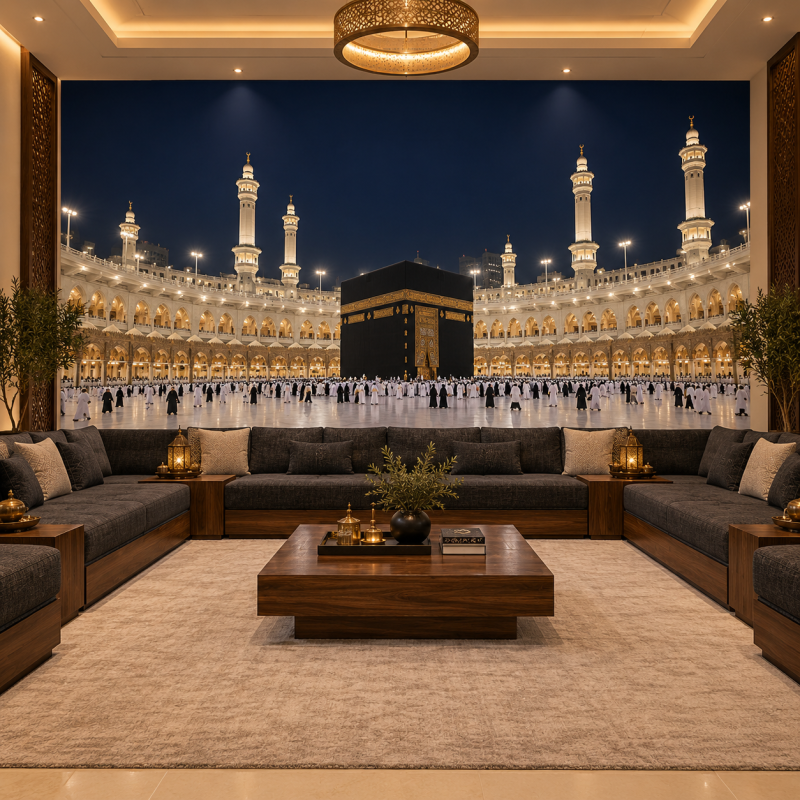
08 octobre
Discover Wafa Noor luxury Islamic wall art ideas for premium home decor, featuring elegant geometry, cobalt blue, ivory, and refined feature walls.
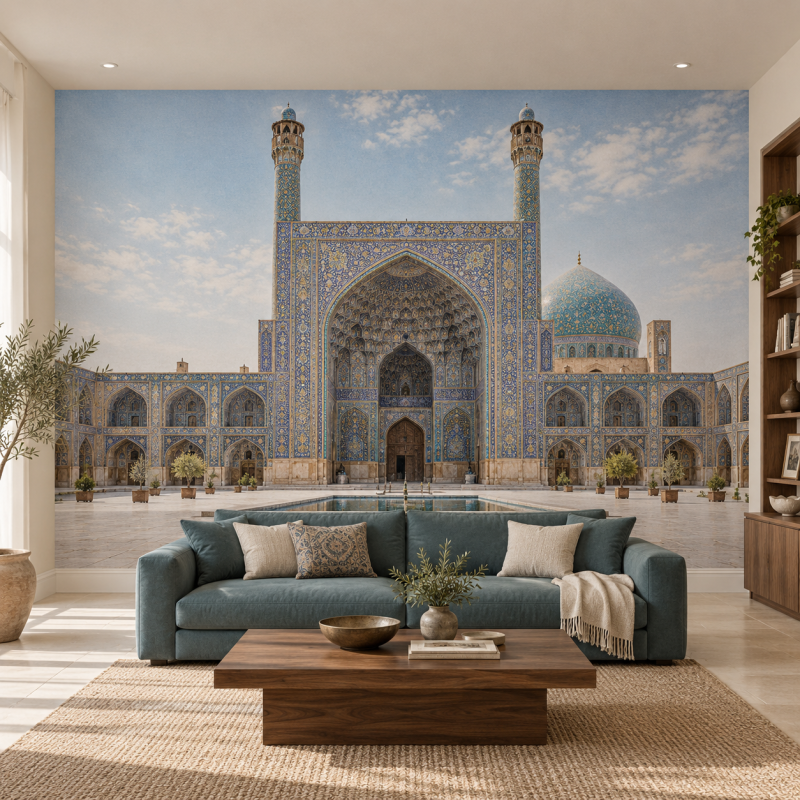
08 octobre
Discover how Wafa Noor Islamic wall art can elevate modern living room decor with geometric patterns, cobalt blue, ivory, and elegant feature walls.
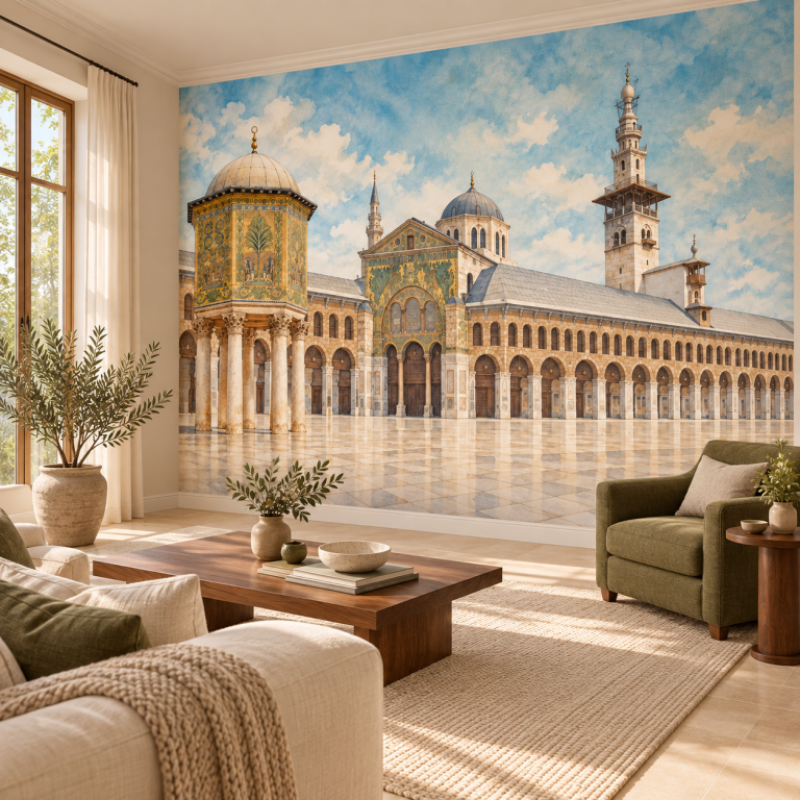
08 octobre
Explore elegant Islamic wall art ideas from Wafa Noor to create serene spaces with balanced colors, meaningful design, and timeless architectural character.
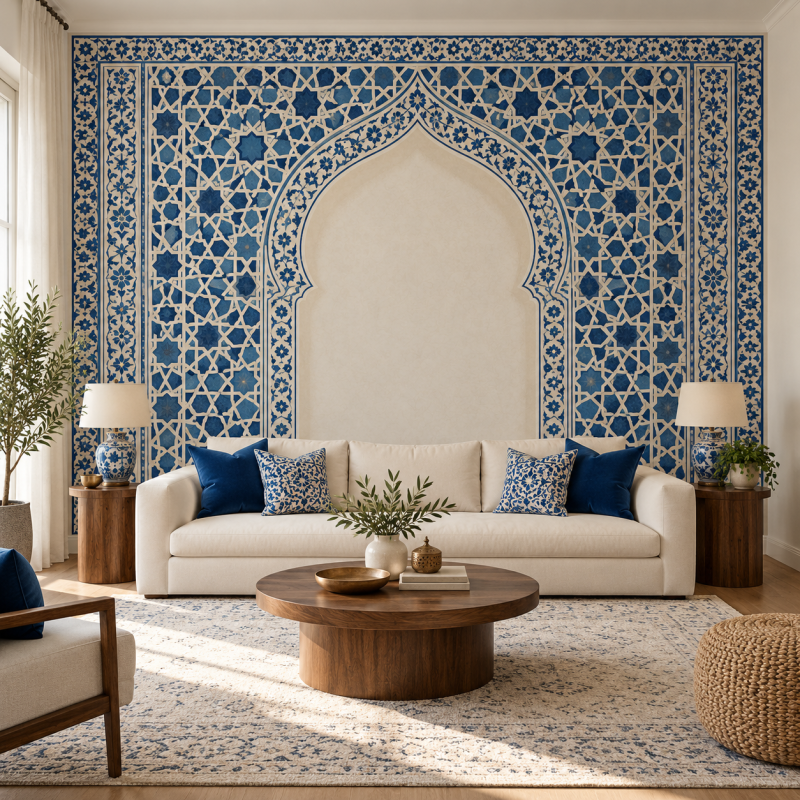
08 octobre
Explore Islamic wall art design ideas from Wafa Noor for stylish interiors, with room-by-room styling, sizing tips, color ideas, and installation guidance.
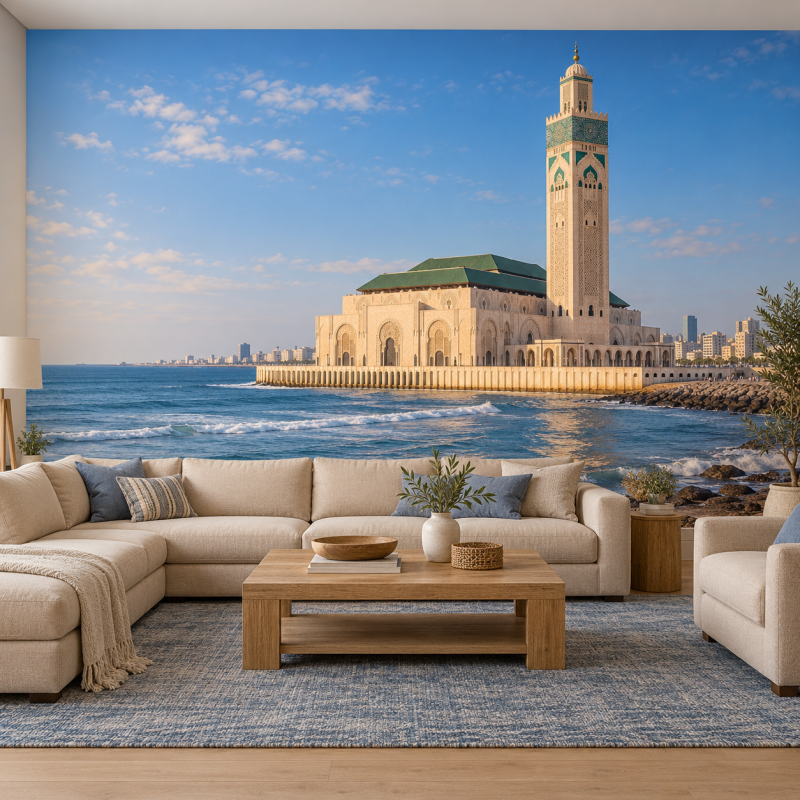
08 octobre
Discover big size Islamic wall art ideas from Wafa Noor for statement walls, with styling tips, sizing advice, room ideas, and installation guidance.
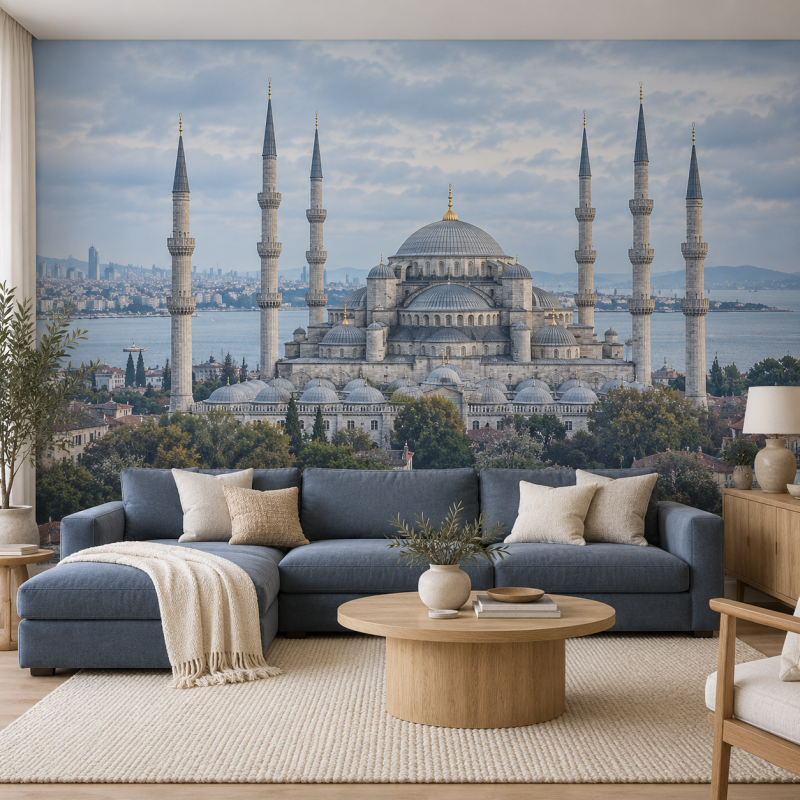
08 octobre
Discover luxury Islamic wall art ideas from Wafa Noor for beautiful homes, with elegant styling tips, room ideas, sizing advice, and more.
Need Help?
Aydınlıkevler Mahallesi, 2006 Sokak, Gıyâsettin Özdemir Apartmanı No: 10/B, Yenişehir / Mersin
[email protected] +90 532 508 69 98Buy $100.00 more to get free shipping
Your cart is currently empty. Let us assist you in finding the right product.
Préférences de cookies